
Enhancing Pedestrian Safety: The Efficacy of In-Roadway Warning Lights at Crosswalks
Why IRWL Matters
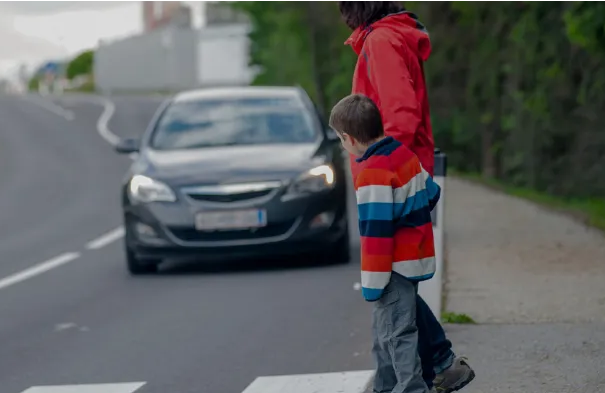
In any city where people still walk to school, cross busy arterials, or cut through parking lots to reach a grocery store, crosswalk safety stops being a traffic-engineering issue and becomes something much more immediate. You notice it fast enough: drivers rolling through turns without looking, pedestrians hesitating at the curb, headlights washing out painted striping after dark. A marked crosswalk alone often isn’t enough anymore.
That’s where in-roadway warning lights (IRWLs) have changed the conversation.
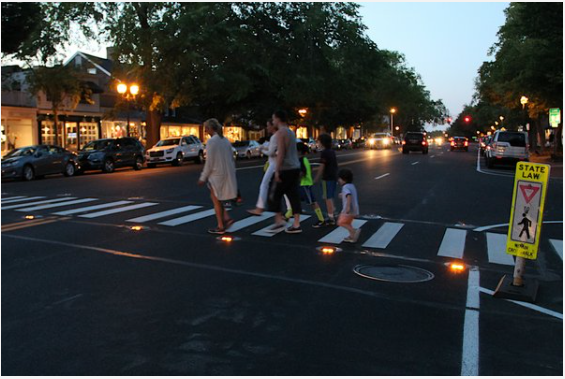
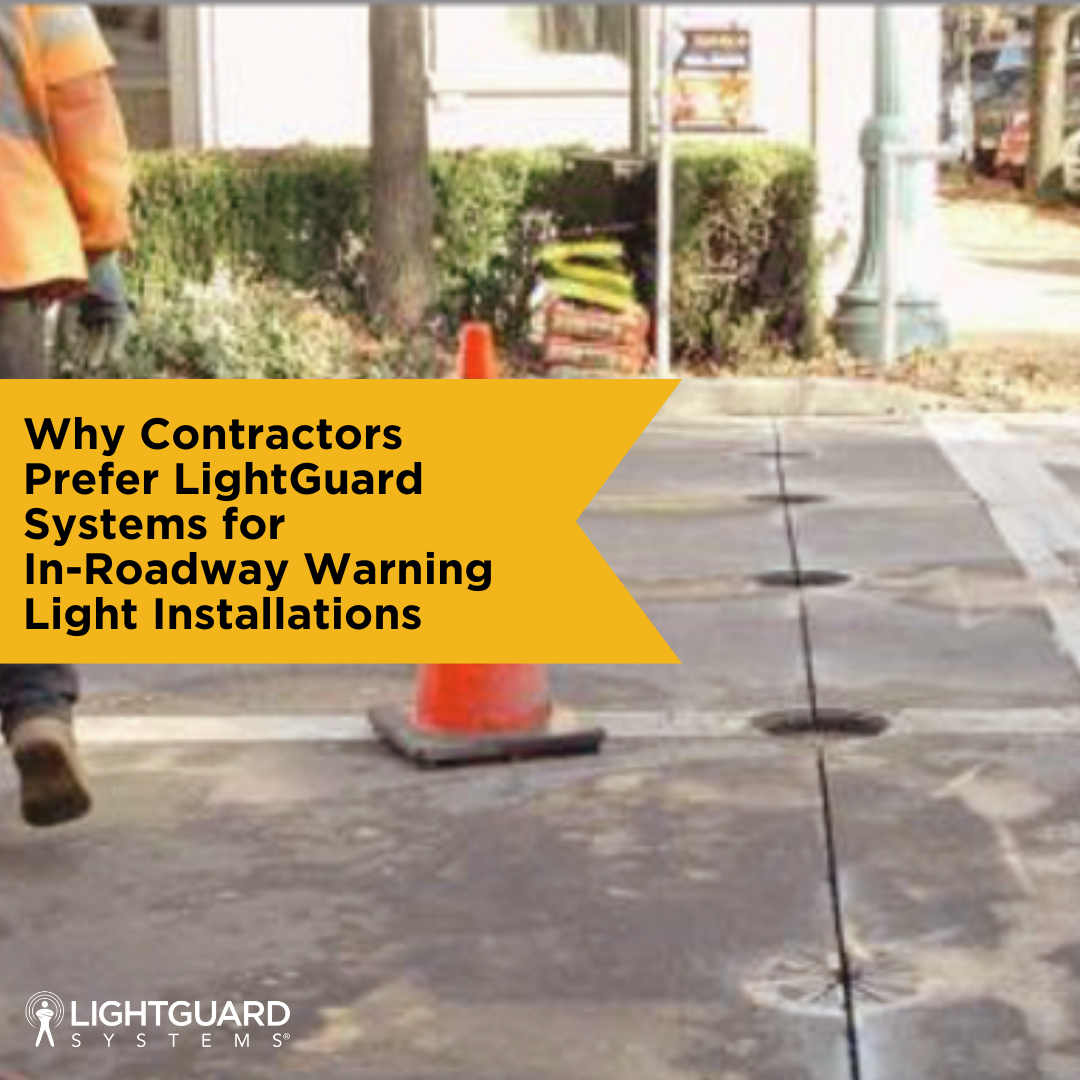
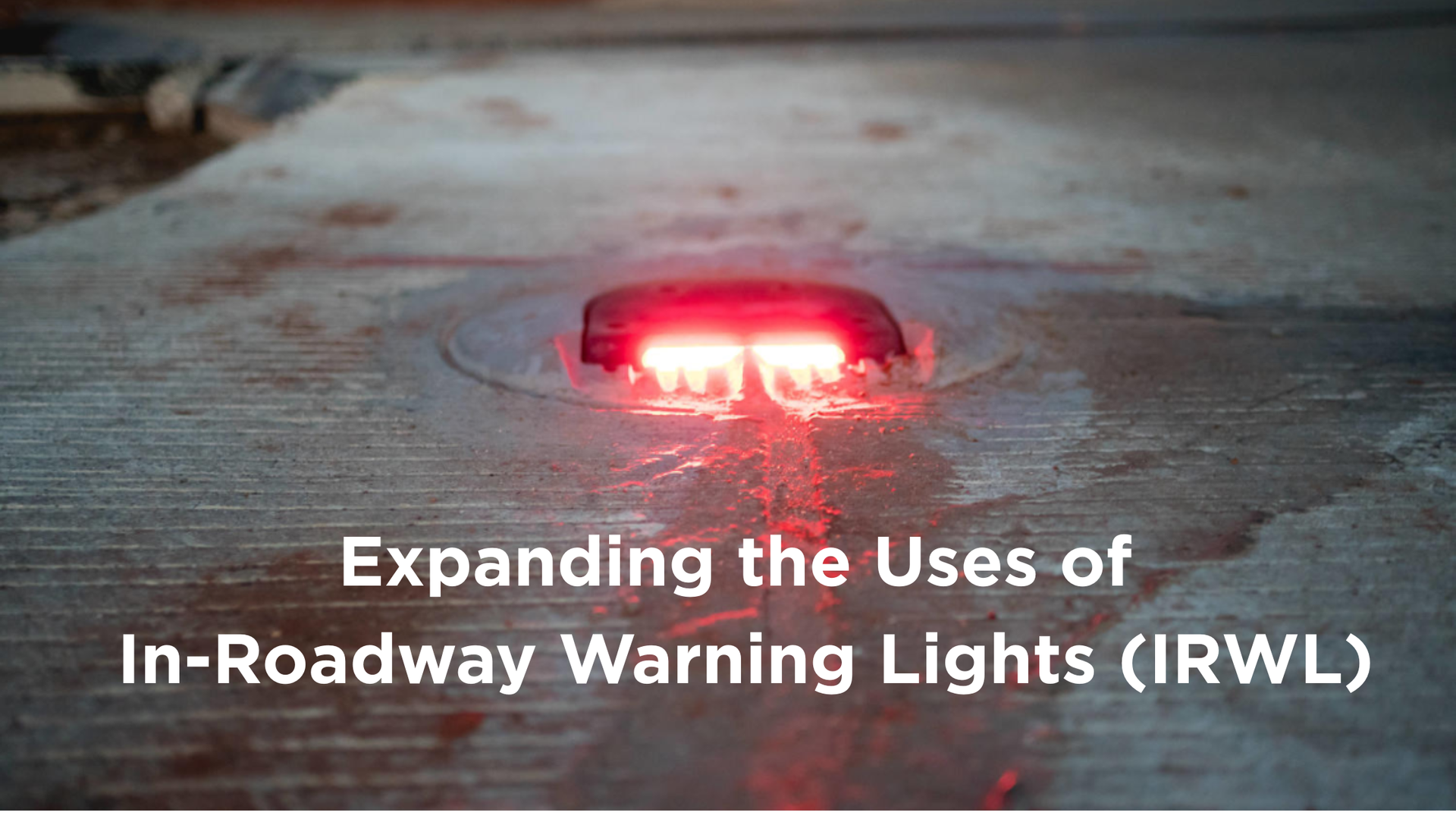
Installed directly within the pavement at uncontrolled public and private facility crosswalks, IRWLs are designed to do one thing exceptionally well: force driver attention back to the crossing itself. Not the sign above it. Not the vague expectation that someone might step out. The crossing. Right there in the driver’s lane of travel.
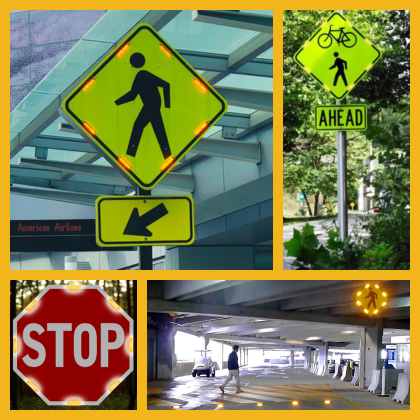
When paired with Rectangular Rapid Flashing Beacons (RRFBs) and flashing pedestrian signs, IRWL systems create a layered warning environment that’s difficult to ignore, even for distracted drivers or in poor visibility conditions.
The Real-World Efficacy of IRWL’s
The research behind IRWL systems is surprisingly consistent. Across multiple studies, the pattern is clear: drivers slow down sooner, yield more often, and recognize crossings faster when in roadway warning lights are present.
A study conducted by Whitlock & Weinberger Inc. found that IRWL systems positively affected driver awareness and altered driver behavior around crosswalks. Interestingly, the results became even more pronounced in difficult conditions such as rain, fog, or nighttime driving, which makes sense if you’ve ever tried spotting a pedestrian wearing dark clothing on a poorly lit road.
Other studies examining marked crosswalks with IRWL installations reported measurable reductions in pedestrian crashes compared to crossings that relied only on pavement markings and standard signage. That distinction matters. Paint fades. Drivers habituate to static signs. Flashing light embedded directly into the roadway triggers a different level of visual response.
And frankly, that immediate visual interruption is often what saves time in a near-miss situation.
Increasing Driver Compliance
Traditional crosswalk signage depends heavily on voluntary driver attention. IRWLs work differently.
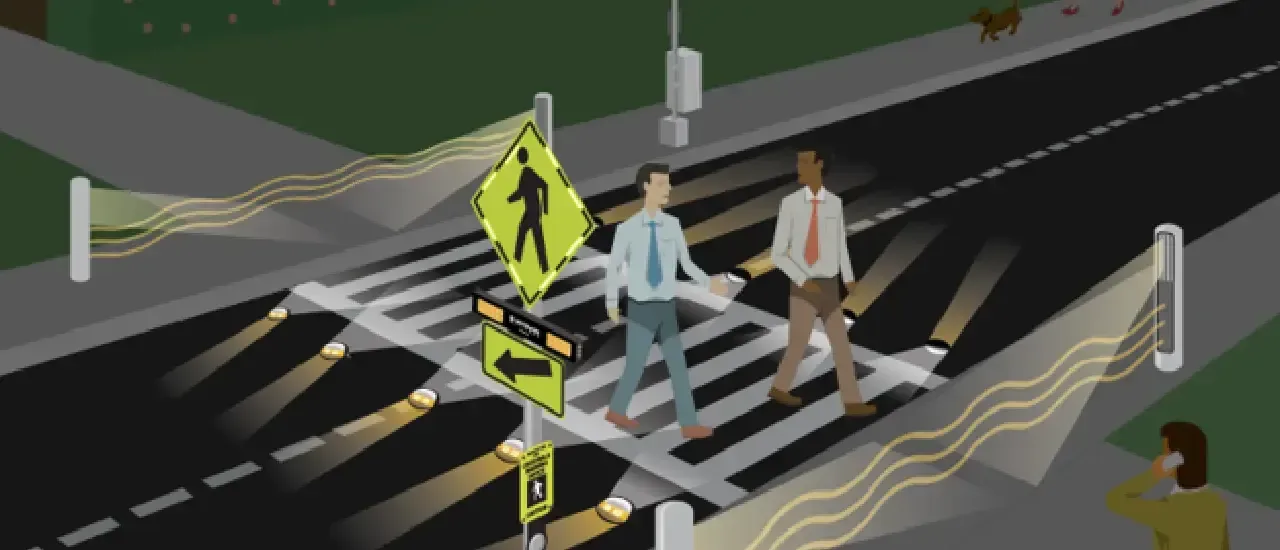
Because the lights sit directly in the roadway, they intersect naturally with a driver’s field of vision. Drivers don’t have to scan upward or process another roadside sign among dozens of competing visual elements. The warning appears where they’re already looking.
That difference becomes critical on high-volume roads, near schools, in mixed-use developments, and in areas where lighting conditions are inconsistent.
Pairing IRWLs with RRFBs strengthens the system even further. The rapid alternating flash pattern used by RRFBs creates urgency without overwhelming drivers. Transportation studies have repeatedly shown higher yielding compliance rates when RRFBs are added to pedestrian crossings.
You see it in practice almost immediately. Drivers react earlier. Hesitation decreases. Pedestrians cross with more confidence instead of standing awkwardly at the curb waiting for a break in traffic.
Extra Layers of Warning
Flashing pedestrian signs may seem secondary compared to IRWLs and RRFBs, but they serve an important purpose. They extend the warning zone.
Placed strategically ahead of the crosswalk, flashing pedestrian signs alert drivers before they actually reach the crossing area. That added reaction time matters more than people realize, especially on roads with higher operating speeds where stopping distance increases dramatically.
The effectiveness of these systems comes from integration, not from any single component acting alone. IRWLs command attention at the pavement level. RRFBs amplify visibility at eye level. Flashing pedestrian signs prepare drivers in advance.
Together, they create a crosswalk environment that feels active instead of passive.
And there’s another benefit that rarely gets enough attention: these systems subtly change pedestrian behavior too. People are more likely to use designated crossings when they trust drivers will actually stop.
Flexible Enough for Nearly Any Environment
One reason IRWL systems have gained traction is their adaptability.
They’re being used on municipal streets, private campuses, school zones, medical facilities, mixed-use developments, recreational trails, and even industrial properties where vehicle-pedestrian interaction creates constant risk. The technology scales well because placement and activation strategies can be tailored to actual site conditions rather than relying on one rigid template.
A suburban school crossing has different demands than a downtown entertainment district. A private logistics facility behaves differently from a public arterial road. Effective IRWL deployment accounts for those differences instead of treating every crossing the same way.
That customization is where experienced roadway safety planning starts to matter.
IRWL Placement Isn’t Guesswork
The placement of IRWLs can make or break the effectiveness of the entire system.
Poor placement creates delayed driver recognition, inconsistent visibility, or visual clutter. Good placement feels almost invisible from a design standpoint because the warning appears exactly when a driver needs it.
Several factors influence positioning:
● Speed limit and real-world traffic speed
● Pedestrian crossing frequency
● Road curvature and sightlines
● Ambient lighting conditions
● Lane configuration
● Potential visibility obstructions
Install IRWLs too close to an intersection, and drivers may process them too late while already focused on turning traffic or signal activity. Place them too far from the crossing, and the connection between the warning and pedestrian location weakens.
Angle matters too. The lights should align naturally with approaching driver sightlines. If warning devices disappear behind vehicles or roadside infrastructure, their effectiveness drops immediately.
Spacing inside the crosswalk area also plays a role. Properly spaced IRWLs provide continuous visual guidance as drivers approach the crossing, reducing confusion and reinforcing the crossing zone itself.
It’s one of those details people rarely notice unless it’s done poorly.
Maximizing Effectiveness
The strongest IRWL installations are the ones that feel intuitive to everyone using the roadway.
Drivers understand what’s happening instantly. Pedestrians trust the crossing. Traffic flow remains smooth instead of chaotic or overly aggressive. Achieving that balance requires thoughtful placement, proper calibration, and an understanding of how people actually behave behind the wheel rather than how engineers hope they behave on paper.
When implemented correctly, IRWL systems don’t just reduce collision risk. They reshape the way a crossing functions altogether.
The road becomes more predictable. And predictability, in traffic safety, is incredibly valuable.
Roadway Safety Pioneers
LightGuard Systems has become one of the more recognized names in this space through its development of Smart Crosswalk technology. The term “Smart Crosswalk,” coined by company president Michael Harrison, reflects a broader approach to pedestrian safety that combines IRWL systems with additional active warning technologies designed to improve driver response and pedestrian visibility.
Rather than relying on a single device, the Smart Crosswalk concept treats pedestrian safety as a coordinated system. That philosophy has shaped a lot of modern crosswalk design thinking over the past decade.
IRWL Studies and Articles
“Evaluation of In-Roadway Warning Lights at Crosswalks in Seattle”
Transportation Research Record: Journal of the Transportation Research Board (2014)
This study examined IRWL installations in Seattle, Washington, focusing on driver yielding behavior, pedestrian safety systems, and traffic flow efficiency. The findings supported the conclusion that IRWL systems improved driver compliance and increased awareness at marked crosswalks.
“Enhancing Pedestrian Safety Using In-Roadway Warning Lights: A Review of Current Research and Practice”
Journal of Transportation Safety & Security (2018)
This review compiled findings from multiple IRWL studies and implementation projects, identifying recurring patterns in effectiveness, system design, and deployment strategy. It remains a useful reference point for municipalities and transportation planners evaluating pedestrian safety upgrades.
Whitlock and Weinberger Transportation, Inc.
An Evaluation of a Crosswalk Warning lights Utilizing In-Pavement Flashing Lights (1998)
Funded by the State of California Office of Traffic Safety and the Federal Highway Administration through the University of North Carolina Highway Safety Research Center, this early study helped establish foundational research supporting the effectiveness of in-pavement flashing light systems at pedestrian crossings.



LightGuard Systems is a registered trademark™ of LightGuard Systems, Inc. Smart Crosswalk is a trademark™ name of LightGuard Systems, Inc. ©2021 LightGuard Systems, Inc. All rights reserved.
Let Us Help You Design a Safer Crosswalk System in Your Community! Contact LightGuard Systems Now.