Expanding the Uses of In-Roadway Warning Lights (IRWL)
How In-Roadway Warning Lights Improve Safety at Crosswalks, Intersections, and Beyond
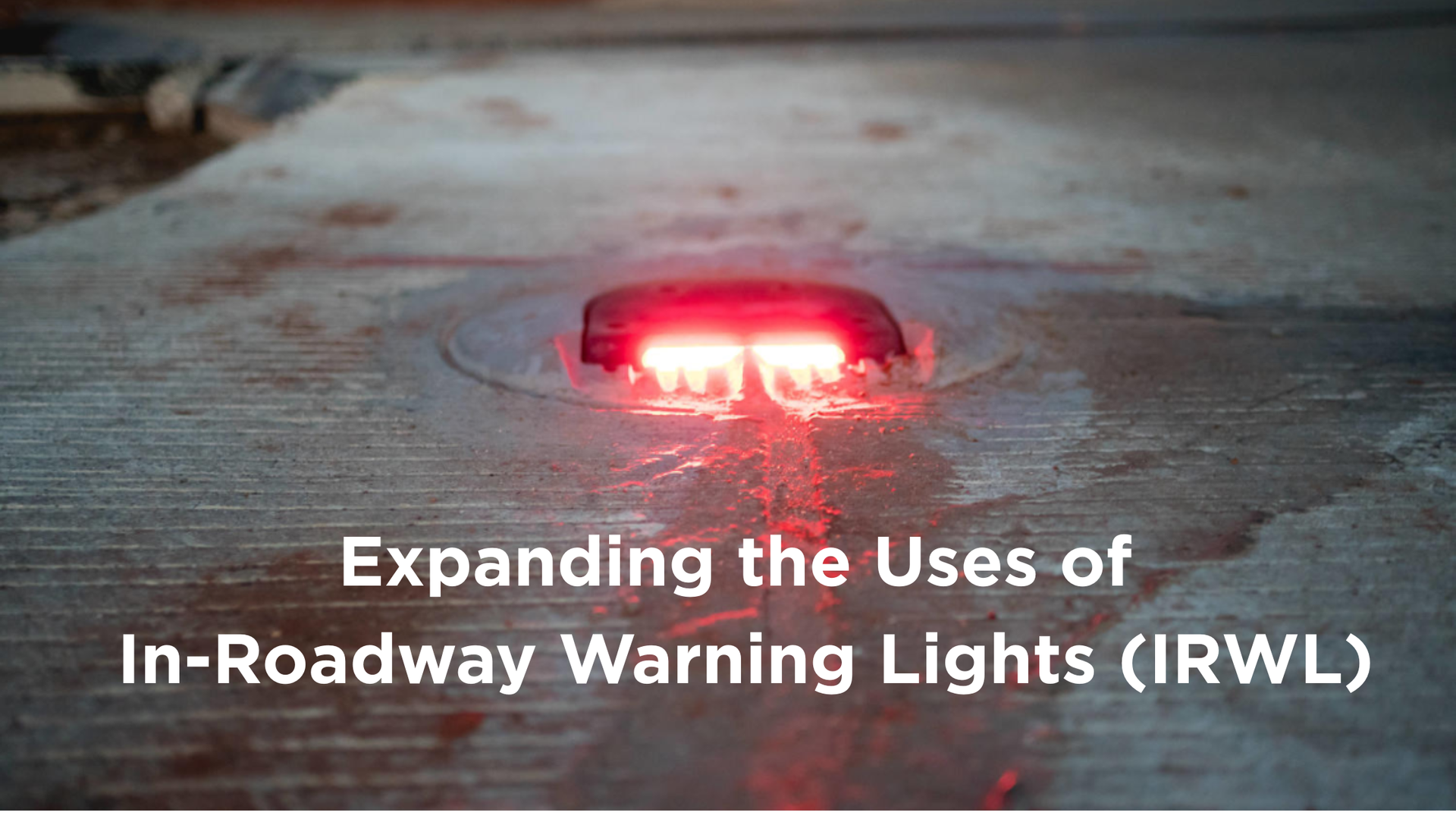
LightGuard Systems didn’t arrive at in-roadway lighting as a concept. It came out of real conditions, the kind where paint fades, signs get ignored, and drivers miss what’s right in front of them. Over the past three decades, their In-Roadway Warning Lights (IRWL) have earned their place by doing something simple and difficult at the same time: getting noticed when it matters. At the center of it all is a practical understanding of road safety tips for pedestrians, not as theory, but as something that has to work in motion.
These lights sit where decisions happen. At the pavement level. Right in the driver’s line of travel.
Color isn’t a design choice here. Its function. Amber, white, and red each carry a different message, and if they’re used correctly, drivers don’t have to think twice about what they’re seeing.
Amber IRWL – Crosswalk Visibility That Actually Cuts Through
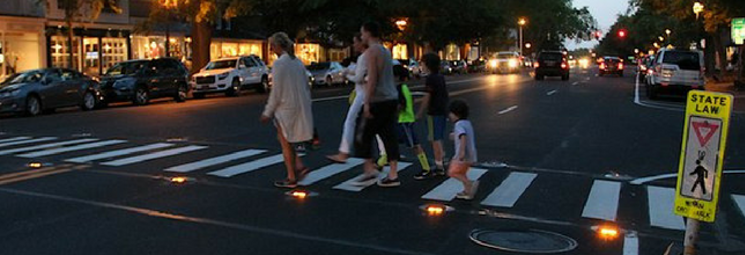
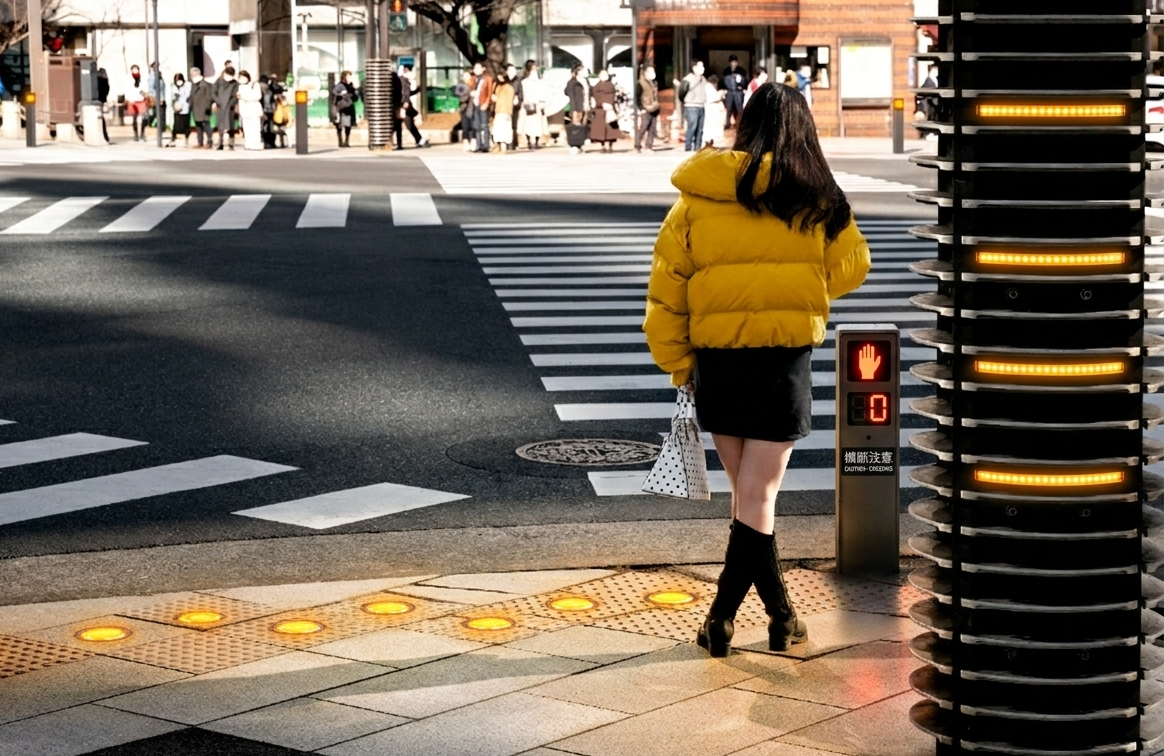
Amber is the workhorse. You’ll see it at crosswalks, especially where traffic doesn’t naturally slow down, on multi-lane roads, on long approaches, places where pedestrians tend to hesitate before stepping off the curb.
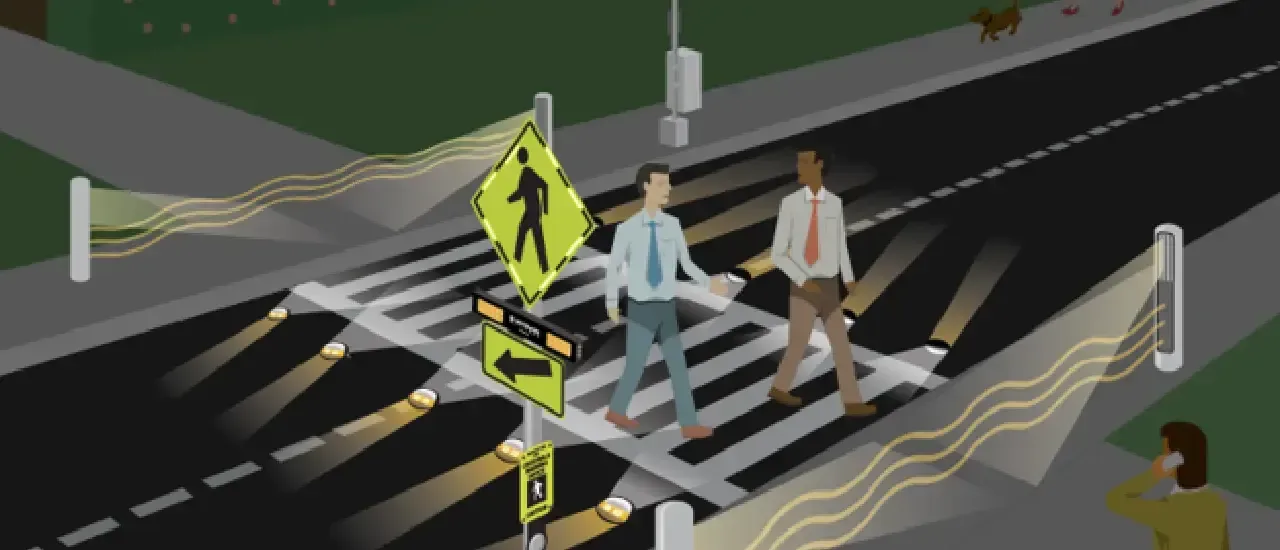
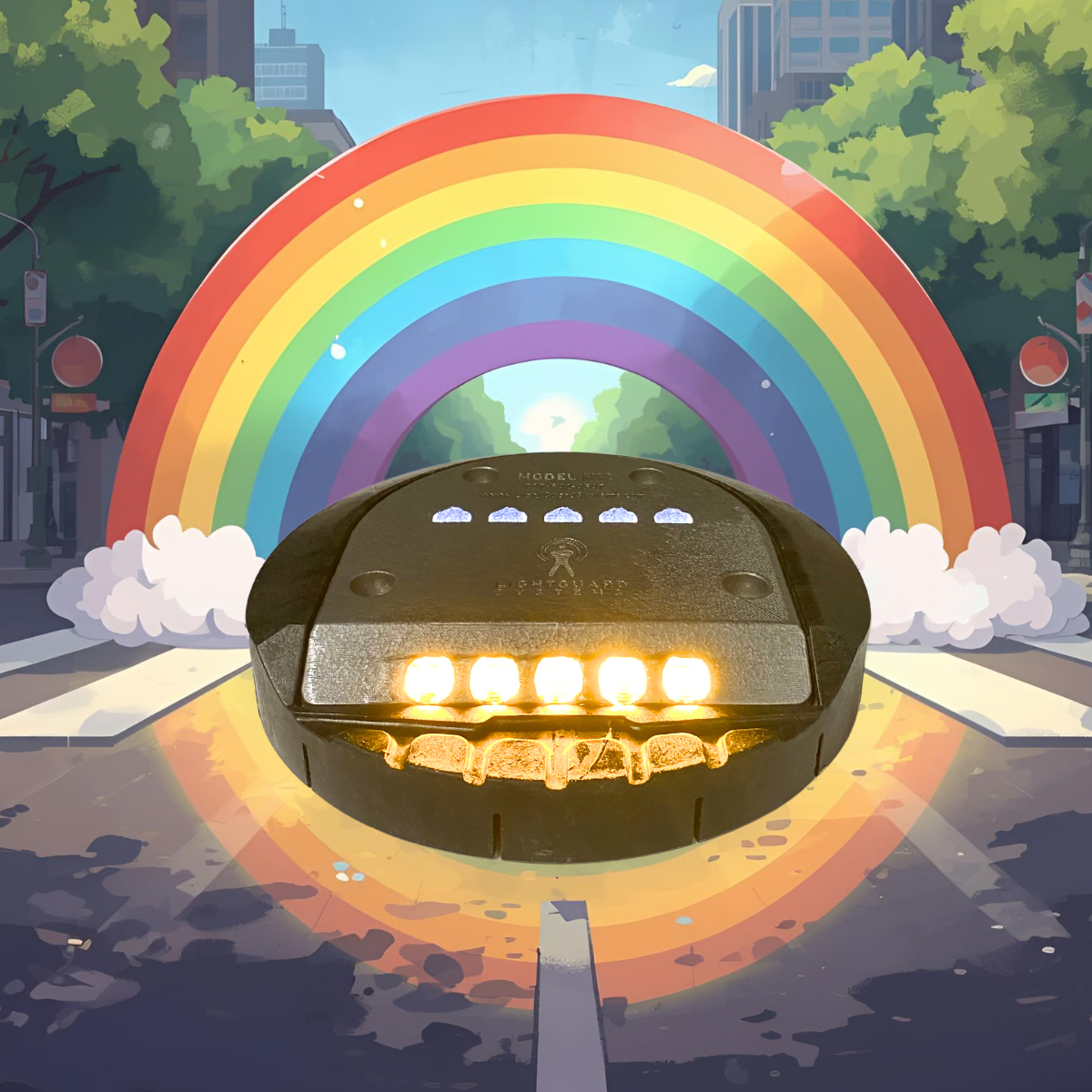
When activated, amber IRWLs create a direct, in-lane warning. Not off to the side like a sign, not overhead where it competes with everything else. It’s right where the driver is already looking, whether they realize it or not.
On wider crossings or higher-speed corridors, that early visual cue makes a measurable difference. Drivers pick it up sooner. Braking starts earlier. The whole interaction feels less abrupt. It reinforces real-world road safety tips for pedestrians, the kind that depend on drivers actually noticing them in time.
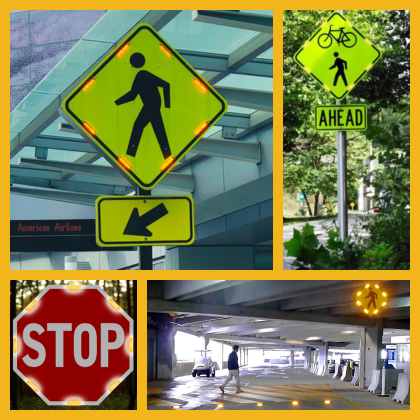
They also play well with other systems. Pair them with LED pedestrian signs, RRFBs, or overhead beacons, and you start to build a layered warning environment. Not redundant, just harder to ignore.
White IRWL – Quiet Control in Complex Traffic Spaces
White IRWLs don’t shout. They guide.
You’ll find them in places where traffic patterns aren’t immediately obvious, such as bus depots, airport loops, oversized intersections where lanes split or merge in ways that aren’t intuitive. In rain or low light, when painted lines start to disappear, these lights keep the path visible.
In private facilities, they do even more. Warehouses, distribution yards, logistics hubs, anywhere vehicles and equipment share space. White IRWLs define movement. They show drivers where to go without needing constant signage or supervision.
It’s not dramatic, but it’s effective. Fewer wrong turns. Fewer close calls. Smoother flow overall. And more quietly, they support road safety tips for pedestrians by reducing unpredictable vehicle movement.
Red IRWL – When Stopping Isn’t Optional
Red changes the tone immediately. It’s not guidance anymore, it’s instruction.
At stop-controlled intersections, especially in rural areas or places with limited sight distance, red IRWLs reinforce what the sign is already telling drivers. But instead of relying on recognition alone, they add urgency. A visual cue that’s hard to rationalize away.
They’re particularly useful where compliance has been inconsistent. You know the kind of intersection where drivers tend to roll through unless something catches their attention. This tends to catch it.
In industrial settings, the application shifts a bit. Red IRWLs mark boundaries. Closed lanes, active loading zones, restricted access points. When tied to doors, gates, or pedestrian detection, they respond in real time. That immediacy matters in environments where conditions change quickly, and where road safety tips for pedestrians depend on clear, immediate signals.
Integration That Feels Natural, Not Layered
One of the strengths of these systems is how easily they fit into what’s already there.
IRWLs don’t compete with existing controls. They reinforce them. Whether it’s LED signage, RRFBs, or traditional flashing beacons, the integration tends to feel intuitive. Drivers aren’t learning something new; they’re getting a clearer version of what they already know. It strengthens the effectiveness of road safety tips for pedestrians without requiring behavioral retraining.
The modular design helps, too. Public roads, transit facilities, and private campuses each come with their own constraints. These systems adapt without requiring a full redesign of the environment.
And that’s really the point. Not to overwhelm the roadway with signals, but to make the critical ones impossible to miss. When combined with flashing RRFB beacons, the visibility and driver response improve in a way that feels immediate and hard to ignore.

LightGuard Systems is a registered trademark™ of LightGuard Systems, Inc. Smart Crosswalk is a trademark™ name of LightGuard Systems, Inc. ©2021 LightGuard Systems, Inc. All rights reserved.
Let Us Help You Design a Safer Crosswalk System in Your Community! Contact LightGuard Systems Now.