Introducing LightGuard Systems' Most Configurable—and Colorful—RRFB Yet: The All-In-One (AIO)
Enhancing Pedestrian Safety with LightGuard's Most Affordable and Versatile Solar-Powered RRFB System

There’s a point, especially at mid-block crossings and wide multilane roads, where striping and static signs just don’t carry their weight. Drivers miss them. Or worse, they notice too late. That’s usually when agencies start looking at flashing RRFB beacons, something that demands attention at the right moment, not all the time.
LightGuard Systems has been in that space for decades, and the All-In-One (AIO) RRFB system feels like a natural extension of that experience. Not a reinvention, really. More like a tightening of everything that tends to get complicated in the field.
A Compact System That Actually Simplifies Things
The idea behind the AIO RRFB is straightforward: fewer components, fewer points of failure, and a cleaner install.
Instead of spreading radios, timers, and controls across multiple enclosures, everything is built into the beacon itself. It makes a difference on-site. Less wiring to manage, fewer alignment issues, and a finished installation that doesn’t look pieced together, exactly what well-designed flashing RRFB beacons should achieve.
It’s a small shift, but one that installers tend to appreciate immediately.
Flexibility That Holds Up in Real Conditions
No two crossings are identical. Some are tight urban corridors with limited pole space. Others sit in school zones where visibility and activation timing matter more than aesthetics. The AIO system leans into that variability.
You can configure it in angled or back-to-back setups, depending on approach visibility. Housing options come in black or yellow, which sounds minor until you’re trying to match existing infrastructure or meet local standards.
And then there’s the wireless sync capability. With the right upgrade, multiple units can operate together, up to four systems in sync. That’s particularly useful at wider crossings where flashing RRFB beacons need to act in coordination rather than isolation.
Solar, Wireless, and Built to Perform
The solar wireless controller is doing more than just reducing trenching costs. It opens up locations that would otherwise be too expensive or disruptive to wire.
Performance-wise, RRFB systems have a strong track record. Federal Highway Administration studies have shown driver yield rates improving significantly, up to 98% in some cases. That’s not a marginal gain. That’s the difference between a driver rolling through and actually stopping.
The AIO keeps that performance intact while making deployment easier, continuing the reliability expected from modern flashing RRFB beacons.
Activation That Matches How People Actually Move
Push buttons still have their place, but they’re not always ideal. People forget to press them. Kids don’t bother. In some cases, they’re just ignored.
The AIO system offers multiple activation options, standard ADA push buttons, yes, but also bollard sensors, audible systems, and touchless stations. That flexibility matters more than it sounds. Different sites call for different behavior patterns, and the system adapts accordingly.
Feature Set Without the Clutter
There’s a tendency in traffic systems to overbuild, to add features that look good on paper but complicate installation or maintenance. The AIO mostly avoids that.
● Integrated radios and timers reduce external hardware
● Solar power with optional battery packs keeps things running reliably
● Multiple configurations allow for better sightline coverage
● Optional add-ons like data logging and remote access are there if you need them, not forced if you don’t
It’s a measured approach. Enough capability to handle complex crossings, without turning every install into a custom project.
When Solar Isn’t Enough: The AC Option
Some locations demand more, higher traffic volumes, constant usage, or simply a preference for hardwired systems.
That’s where the AC RRFB setup comes in. Built around the Universal AC Controller, it handles multiple inputs and outputs without much fuss. More importantly, it provides data. Directional counts, peak usage times, weekly patterns, and useful information if you’re trying to justify infrastructure decisions or refine signal timing.
Activation methods expand here as well. Push buttons, bollard sensors, motion detection, even wireless key fobs. Once triggered, the system runs the irregular WW+S flash pattern that drivers recognize quickly.
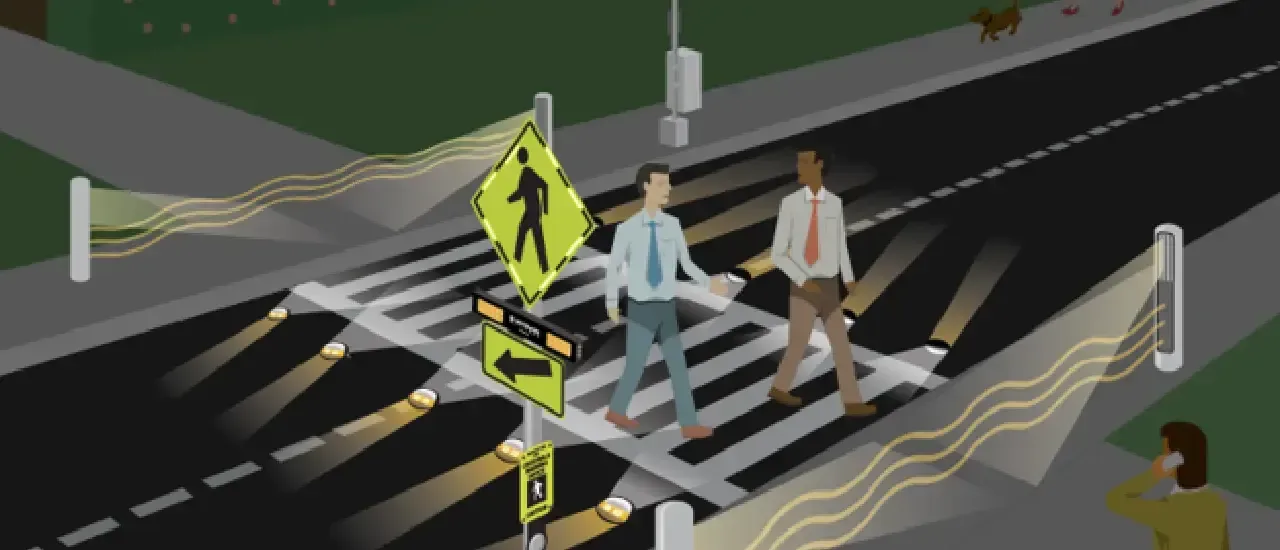
It’s often paired with LED signage or in-roadway warning lights, especially in areas where additional visual reinforcement helps.
A Practical Step Up in Crosswalk Safety
LightGuard Systems has been working in this space long enough to know what tends to fail, what gets ignored, and what actually changes driver behavior.
The AIO RRFB system reflects that. It doesn’t try to do everything. It focuses on doing the critical things well, visibility, timely activation, and reliable operation over time.
For agencies, contractors, and planners, that usually translates to fewer headaches after installation. And for pedestrians, it means something simpler: drivers who actually notice them when it matters.
A Track Record That Shows Up in the Details
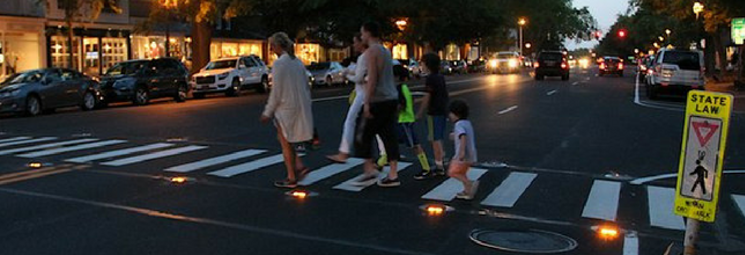
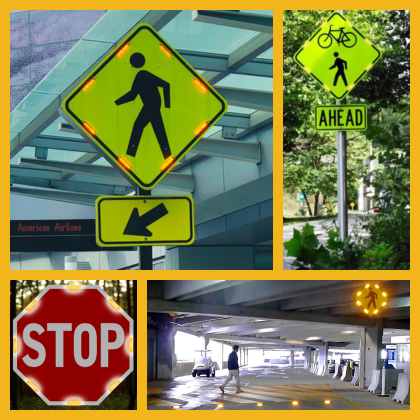
LightGuard’s broader lineup, Smart Crosswalk systems, in-roadway warning lights, flashing signs, and automated activation methods, has been in place across cities, campuses, and transportation networks for years. The AIO system fits into that ecosystem without friction.
If you’re evaluating options for a crossing that’s outgrown basic signage, this is the kind of system worth looking at closely. Not because it’s flashy, but because it’s been built with a clear understanding of how these environments behave in the real world.
Getting Started
If you’re planning an upgrade or starting from scratch, it’s worth having a conversation early. The right configuration tends to depend on site specifics, traffic speed, approach angles, a nd pedestrian volume.
LightGuard Systems can walk through those details and help match the system to the crossing, rather than forcing the crossing to fit the system. As part of the broader category of workplace pedestrian safety solutions, the AIO offers a practical, field-ready approach to improving visibility and driver response.




LightGuard Systems is a registered trademark™ of LightGuard Systems, Inc. Smart Crosswalk is a trademark™ name of LightGuard Systems, Inc. ©2021 LightGuard Systems, Inc. All rights reserved.
Let Us Help You Design a Safer Crosswalk System in Your Community! Contact LightGuard Systems Now.