Expanding the Passive Pedestrian Activation Lineup: Introducing the Decorative Boulder Bollard and Complete Family of Sensor Activation Solutions
NEW Decorative Boulder Bollard - Passive Pedestrian Sensor
Anyone who’s worked on pedestrian infrastructure for more than a few projects knows this quickly: there’s no universal solution. What works in a tight downtown corridor won’t necessarily hold up on a rural trail or an industrial access road. LightGuard Systems has leaned into that reality for years, and it shows in how their Passive Gateway Pedestrian Activation line keeps evolving, including a range of pedestrian bollards designed for varied environments.
This isn’t about adding options for the sake of it. It’s about giving engineers and planners the right tool for the environment they’re actually dealing with.
A New Addition That Doesn’t Look Like Equipment
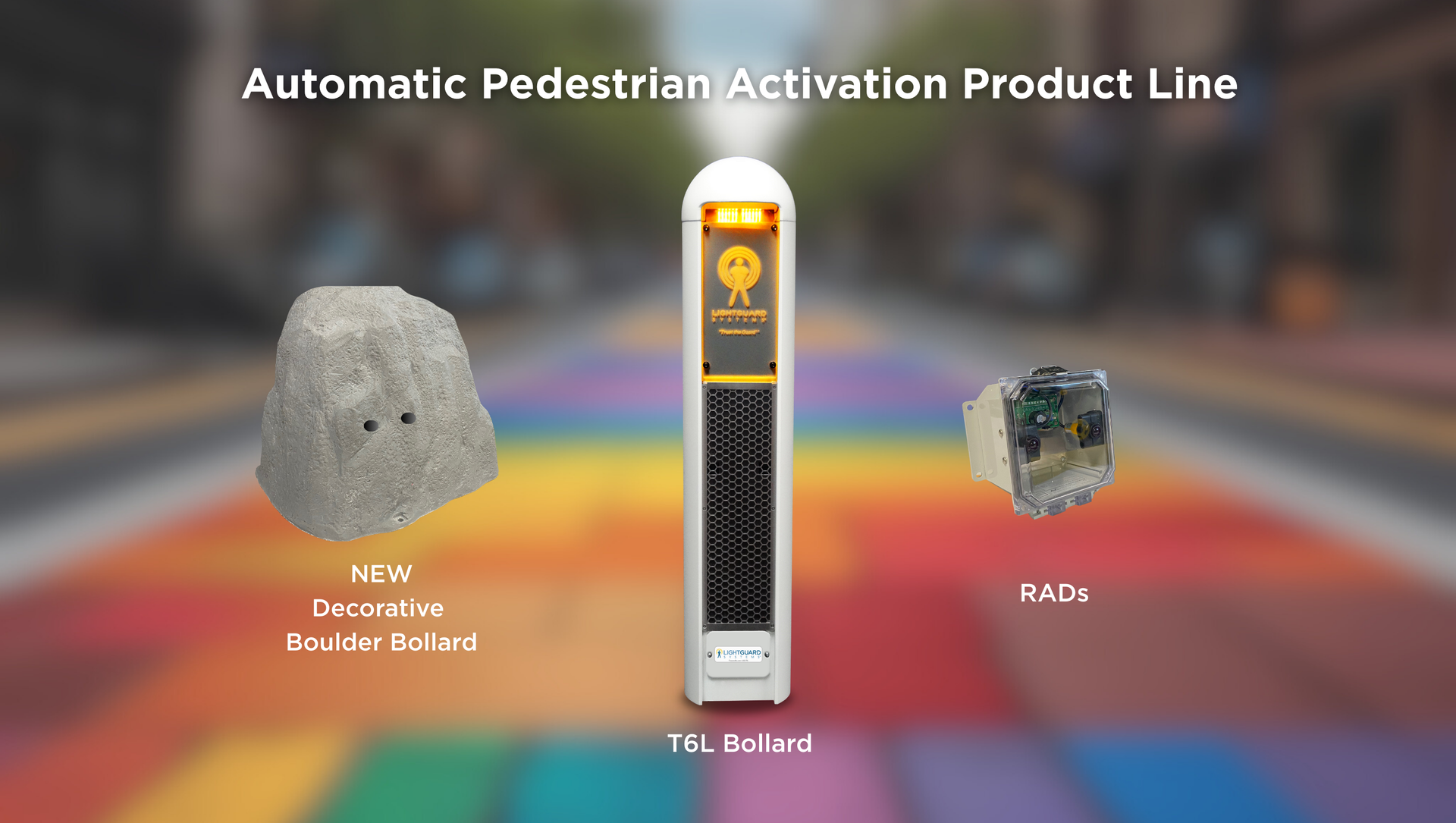
The latest entry, the Decorative Faux Boulder Bollard (LGS-DPD), feels like a response to a very specific problem: places where traditional hardware looks out of place.
Parks, greenways, and trailheads aren’t environments where a standard metal bollard blends in. It interrupts the setting. The faux boulder approach fixes that without compromising function. From a distance, it reads as a landscape. Up close, it’s doing real work, something well-designed pedestrian bollards rarely achieve without drawing attention.
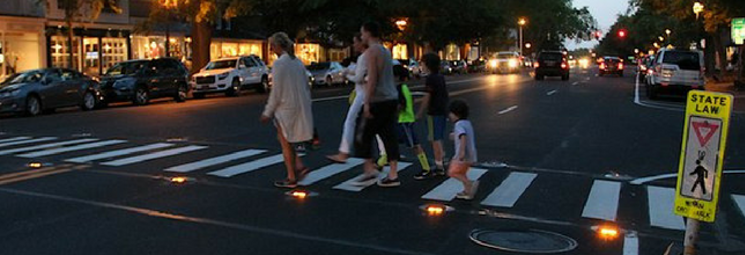
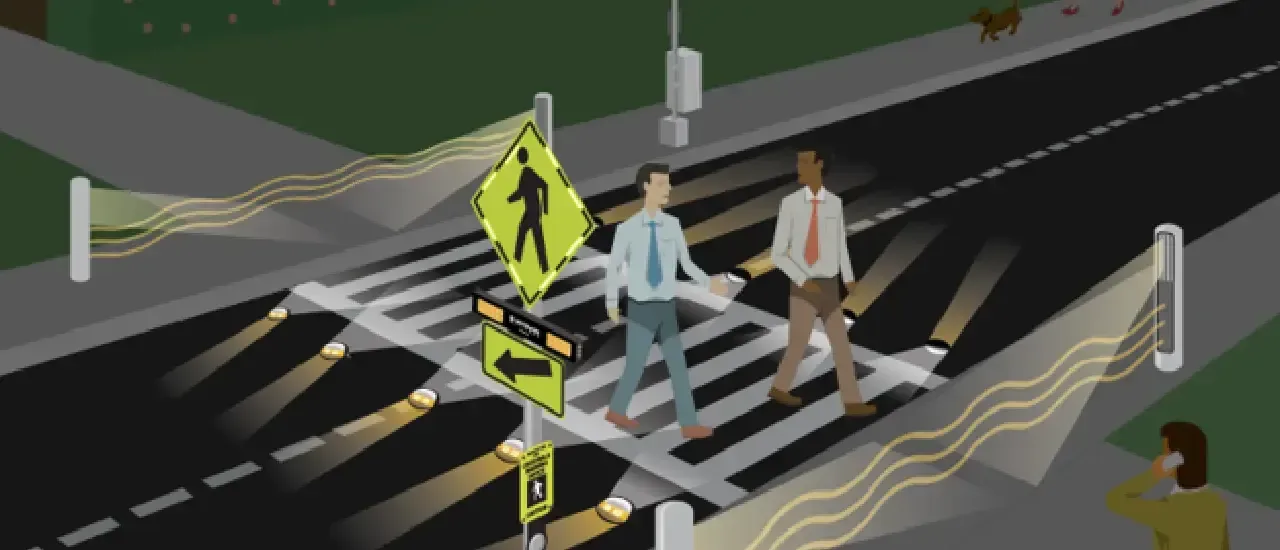
Inside, it uses the same dual infrared gateway sensors found in LightGuard’s other systems. A pedestrian steps into the detection zone, and the system triggers automatically, activating in-roadway warning lights, LED signage, or RRFBs without a button press. Directional sensitivity keeps it from firing unnecessarily, which matters more than people think in low-traffic areas where false activations quickly become ignored.
Best suited for:
● Parks and greenways
● Trailheads
● Campuses
● Rural crossings
The T6L Bollard: When Design Still Matters
The T6L Bollard Sensor has been around long enough to prove itself, especially in environments where aesthetics are part of the approval process, not an afterthought.
Urban cores, historic districts, and airport walkways are places where bulky or industrial-looking equipment gets pushback. The T6L avoids that. It’s slim, well-finished, and customizable in ways that actually help it blend into its surroundings rather than stand out, exactly what modern pedestrian bollards should aim for.
Under the surface, though, it’s the same story: reliable pedestrian detection, consistent activation, no need for user interaction. It’s the kind of system that quietly does its job without drawing attention, which is exactly what most cities want.
Best suited for:
● City centers
● Main streets
● Retail corridors
● Airports
● Architecturally sensitive zones
RAD Sensor: Built for Places That Don’t Care About Looks
Not every installation needs to be subtle. Some just need to work, day in and day out, without complaint.
That’s where the RAD Sensor comes in. It uses the same core detection technology as the T6L and the boulder bollard, but the housing is straightforward, metal, durable, and cost-conscious. No extra finishing, no design flourishes.
It’s a practical choice for industrial sites, remote crossings, or anywhere budgets are tight but reliability can’t be compromised. Wall-mounted or pole-mounted setups are often easier here, and the RAD adapts to that without fuss, an approach often preferred over traditional pedestrian bollards in rugged environments.
Best suited for:
● Industrial facilities
● Utility corridors
● Remote crossings
● Budget-sensitive projects
What Carries Across the Entire Line
Despite the different forms, the underlying system stays consistent. That’s deliberate.
● Passive detection: No buttons, no hesitation. The system responds as soon as someone enters the crosswalk zone.
● Directional triggering: Activation only happens when it should. That cuts down on unnecessary flashing and extends system life.
● Field adjustability: Installers can fine-tune alignment and sensitivity on site, which matters more than spec sheets admit.
● Failsafe operation: If something blocks the sensor, the system defaults to a flashing state rather than going dark.
● System compatibility: Integration with LightGuard’s controllers is straightforward, especially for in-roadway warning light setups.
● Optional audible cues: A small addition, but important for accessibility where it’s needed.
A Complete Kit, Not Just a Product Line
With the addition of the Decorative Boulder Bollard, the lineup feels complete in a way it didn’t before. You’ve got solutions that fit landscaped trails, dense urban streets, and rugged industrial zones, all built around the same detection logic.
That consistency matters. It means agencies don’t have to relearn systems from one project to the next. Performance stays predictable, even when the form factor changes.
In the end, that’s what most teams are after. Not novelty. Not complexity. Just pedestrian activation systems that fit the setting, hold up over time, and do exactly what they’re supposed to do, no more, no less.
A Complete Kit, Not Just a Product Line
Whether it’s a quiet trail crossing or a busy downtown intersection, the goal doesn’t change. People need to be seen, and systems need to respond without friction.
LightGuard’s approach here is straightforward: adapt the housing to the environment, keep the detection reliable, and let the infrastructure do its job without getting in the way.
As part of a broader category of traffic safety solutions, these systems reflect a practical shift toward hands-free, context-aware safety design. If you’re planning a project and trying to balance safety, design, and cost, there’s likely a configuration in this lineup that fits without forcing compromises. And that, more than anything, is what makes the system worth paying attention to.




LightGuard Systems is a registered trademark™ of LightGuard Systems, Inc. Smart Crosswalk is a trademark™ name of LightGuard Systems, Inc. ©2021 LightGuard Systems, Inc. All rights reserved.
Let Us Help You Design a Safer Crosswalk System in Your Community! Contact LightGuard Systems Now.