Pedestrian Crosswalk Warning Light Systems | GOOD, BETTER, BEST
Designing a Lighted Crosswalk Isn’t About Saving Money
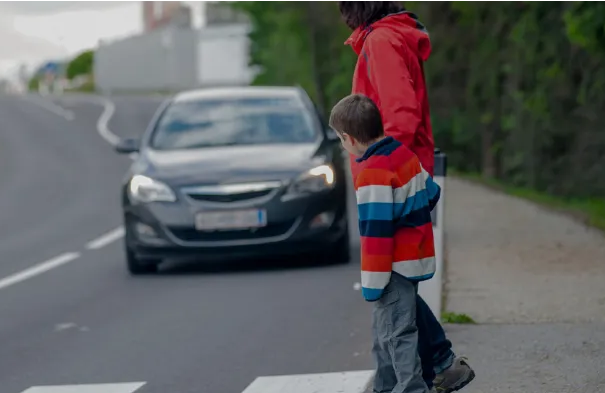
When cities talk about pedestrian safety projects, budget conversations usually arrive first. But anyone who has spent time studying crash data, driver behavior, or real-world crossing conditions knows the equation is different with lighted crosswalk systems and modern crosswalk safety systems. The objective isn’t finding the cheapest option. It’s reducing the chance that somebody gets hit by a car.
And every crossing tells a different story.
A two-lane residential school zone behaves nothing like a four-lane arterial road carrying commuters at 40 mph. A shopping center parking structure has entirely different visibility problems than a park trail crossing at dusk. Even something as simple as a curve in the roadway or a row of parked delivery vans can change how drivers perceive pedestrians.
That’s why effective pedestrian crosswalk systems can’t be treated like plug-and-play hardware. The location itself determines the solution.
Speed Changes How Drivers See the Road
One of the most overlooked factors in crosswalk design is human vision.
The National Highway Traffic Safety Administration has long noted that a large percentage of pedestrian fatalities happen away from controlled intersections, with vehicle speed playing a major role. As speed increases, peripheral vision narrows dramatically. Drivers stop scanning broadly and begin focusing farther ahead in a tighter cone.
In practical terms, that means a pedestrian standing near the curb becomes easier to miss as vehicles move faster.
It also explains why traditional signs alone often struggle on wider or faster roads. A static sign sitting off to the side of the roadway may technically meet compliance standards, but compliance and visibility are not always the same thing.
Good crosswalk safety systems account for where the driver is actually looking.
Where RRFB Systems Work Best
Rapid Rectangular Flashing Beacons, commonly called RRFBs, have become increasingly common over the last decade, especially around schools and neighborhood crossings.
They work by flashing amber lights in an alternating “wig-wag” pattern that immediately catches the eye. When used properly, they can significantly improve driver awareness at crosswalk entrances.
On slower roads, particularly two-lane or low-speed corridors where drivers already expect pedestrian activity, RRFB systems are often a solid solution. They’re cost-effective, relatively simple to install, and less visually intrusive than larger traffic control systems.
But they do have limitations.
Because the flashing units are mounted near the signposts at the edge of the crossing, they can fall outside a driver’s direct line of sight at higher speeds. Add a truck in the adjacent lane, poor weather, or nighttime glare, and visibility becomes less reliable. That doesn’t make RRFBs ineffective. It just means context matters.
A crossing on a quiet neighborhood street and a crossing on a busy commuter route should not be treated the same way.
Why Flashing LED Warning Signs Fill the Gap
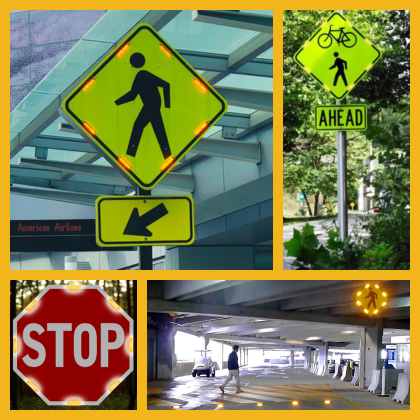
Once speeds climb or traffic becomes more complex, flashing pedestrian crossing signs start making a lot more sense.
Unlike passive signage, LED-enhanced warning signs actively command attention. The message is immediate and hard to ignore, especially when the sign activates only during pedestrian use. Drivers don’t tune it out as background infrastructure because the system responds dynamically to activity inside the crossing.
That distinction matters more than people realize.
In unfamiliar areas, drivers rely heavily on visual cues. Out-of-town motorists, commuters moving through arterial roads, or drivers exiting highways are less likely to anticipate pedestrian crossings in the same way local traffic might. Flashing LED systems reinforce the crossing visually before the driver reaches it.
And unlike oversized traffic hardware that can dominate a streetscape, modern LED pedestrian warning systems integrate fairly cleanly into existing infrastructure. They improve visibility without turning every crossing into a signalized intersection.
In-Roadway Warning Lights Change the Visibility Equation
If there’s one technology that consistently performs across the widest range of crossing conditions, it’s in-roadway warning lights.
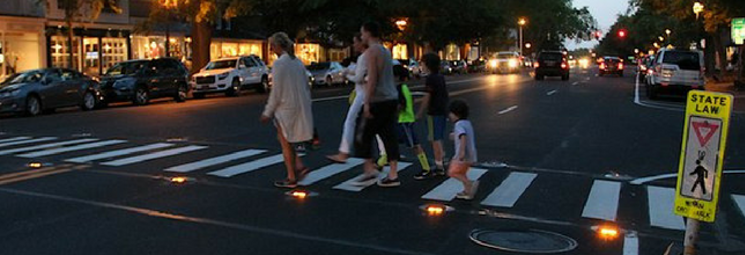
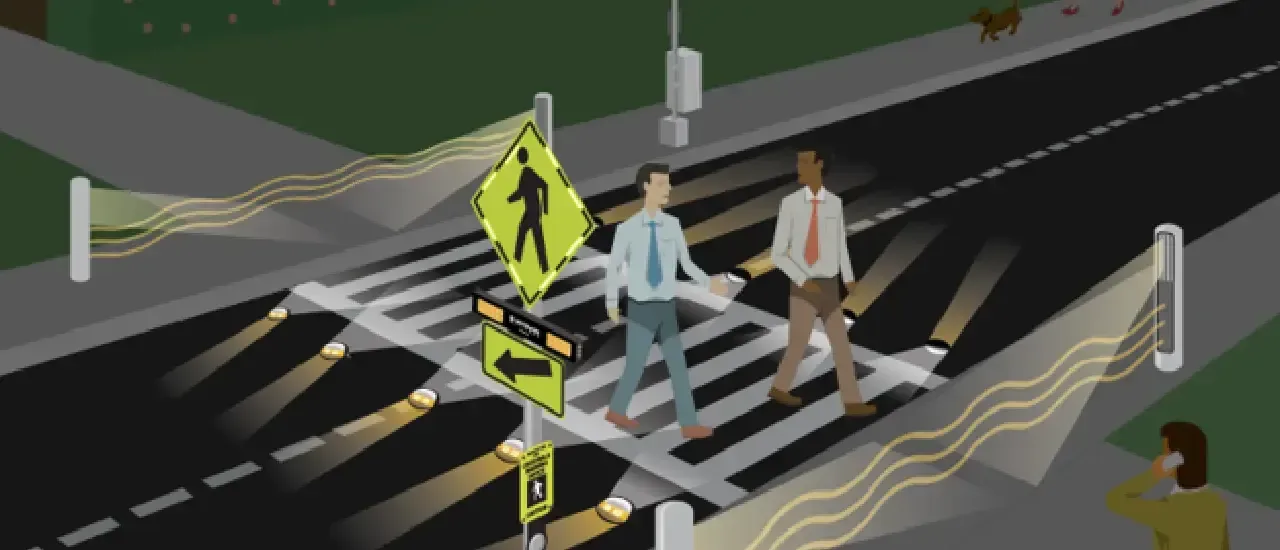
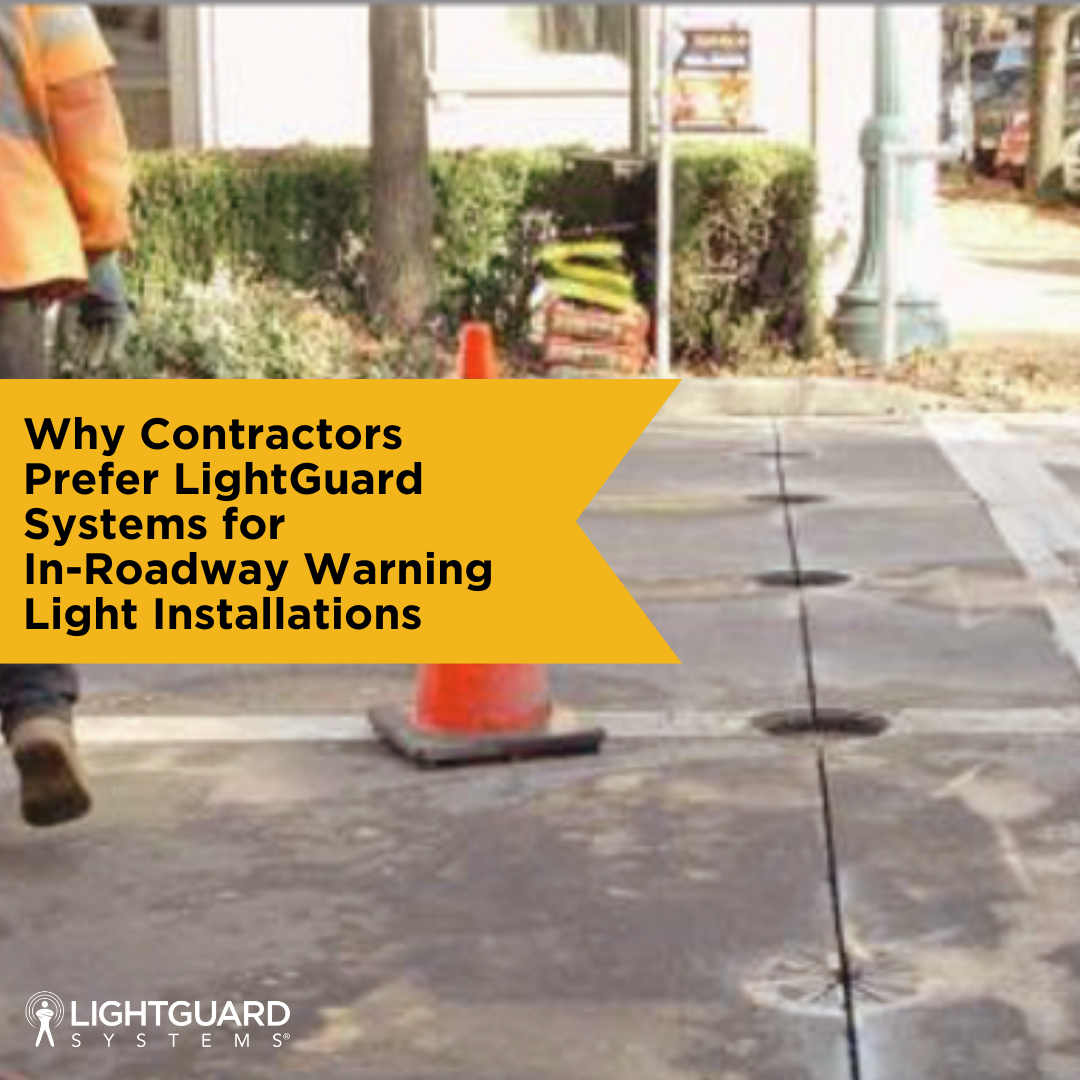
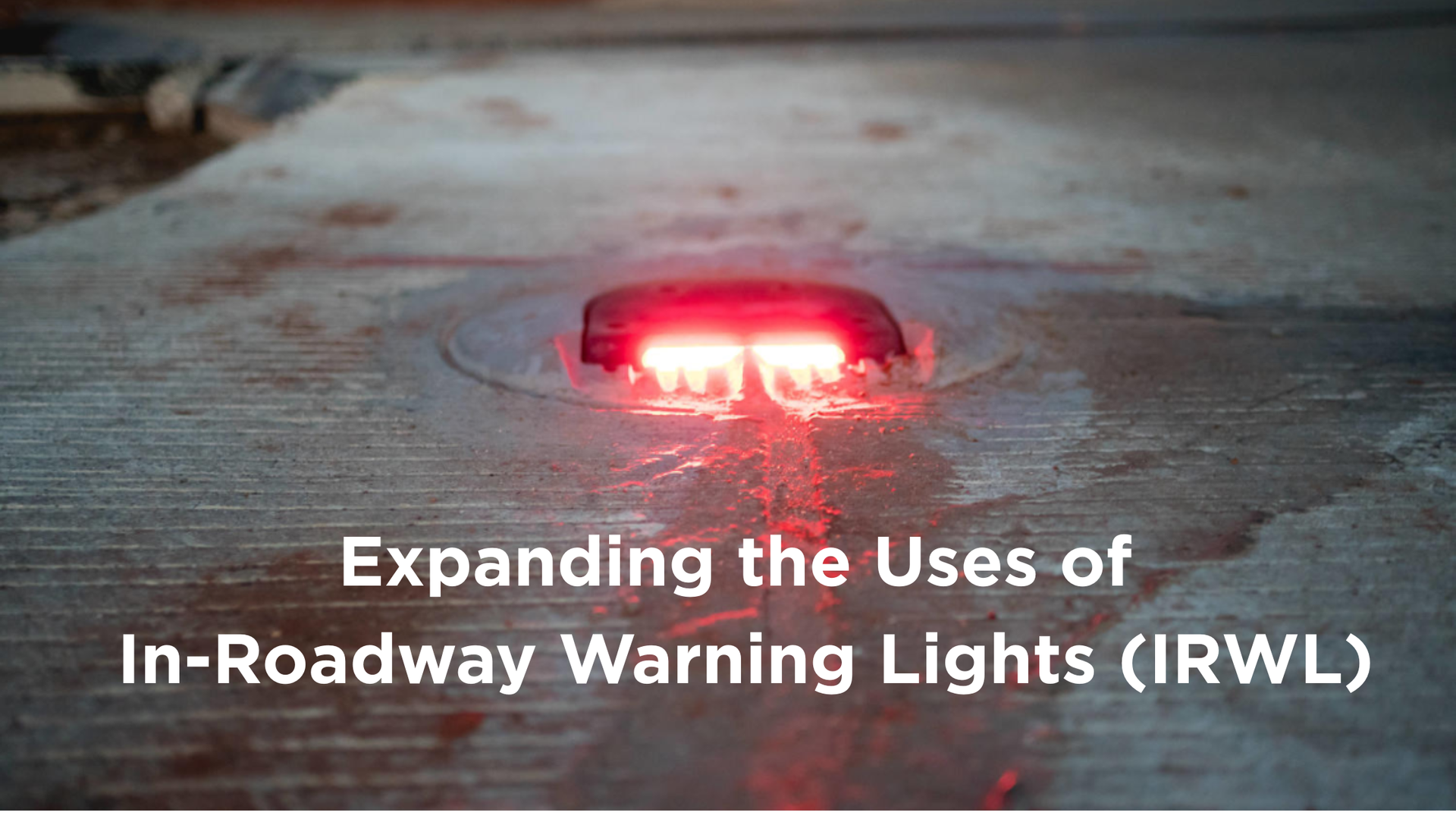
IRWL systems work differently because they place the warning directly inside the driver’s field of vision rather than beside it. The illuminated lights embedded within the pavement outline the crosswalk itself, creating a visual corridor drivers can identify from significant distances away.
That becomes critical at night, during rain, or on multilane roads where traditional signage competes with headlights, storefront lighting, and traffic clutter.
Well-designed in-roadway warning lights can alert motorists hundreds of feet in advance, even before they fully identify the pedestrian. The roadway itself becomes the warning device.
And frankly, that solves a problem many municipalities quietly struggle with: visibility consistency. Signs can be blocked. Poles disappear into visual noise. Pavement lighting, when done correctly, stays in the driver’s path of travel.
Why IRWL Systems Perform Better at Higher Speeds
As driver speed increases, peripheral awareness shrinks. That’s basic human physiology, not poor driving behavior.
The advantage of IRWL systems is that they remain visible even when the driver’s focus narrows. Instead of depending on roadside recognition, the lights create a direct visual signal aligned with the vehicle’s trajectory.
This is particularly effective on wide crossings, roads without center medians, curved approaches, or areas where landscaping and parked vehicles limit visibility.
You see the difference most clearly in difficult environments:
● Parking garage exits
● Airport pickup lanes
● Corporate campuses
● Mid-block urban crossings
● School corridors during low-light conditions
● Trail crossings cutting across commuter roads
In these settings, traditional flashing pedestrian crossing signs alone may not provide enough visual reinforcement.
Crosswalk Design Has to Account for Real Conditions
There’s a tendency in traffic planning to focus heavily on standardization. Standards matter, obviously. But pedestrians don’t walk through laboratory conditions.
Rain changes reflection patterns. Delivery vans create blind spots. Drivers glance at navigation screens. Sun glare wipes out contrast during late afternoon commutes. A crossing that performs perfectly at noon can become difficult to read at 6:30 p.m. in winter.
The strongest pedestrian crosswalk systems and crosswalk safety systems account for those messy, real-world variables instead of assuming ideal driver behavior.
That’s why advanced systems increasingly combine multiple layers of warning: in-roadway lights, flashing pedestrian crossing signs, motion detection, push-button activation, radar sensing, and pedestrian bollards working together rather than independently.
The Best Safety Systems Often Feel Invisible
Interestingly, the most effective crossings usually don’t feel overwhelming to pedestrians or drivers. They feel intuitive.
Low-profile in-roadway lighting blends naturally into modern streetscape design while still delivering extremely high visibility when activated. There’s no need for massive mast arms or bulky overhead traffic equipment in every situation.
Good pedestrian infrastructure should communicate clearly without turning the roadway into visual clutter.
That balance between visibility and restraint matters more now than it did twenty years ago. Cities are trying to build safer streets without making them feel aggressively over-engineered. Minimalist, highly visible lighting systems tend to achieve that balance surprisingly well.
What the Yield Studies Continue to Show
Field studies using modern in-roadway warning lights have repeatedly shown significant improvements in driver yielding behavior, particularly at night when pedestrian visibility drops the most.
That’s the part people often forget: nighttime crossings are fundamentally different environments. Depth perception changes. Contrast weakens. Drivers process information more slowly than they do during daylight hours.
A properly designed lighting system compensates for those weaknesses before a conflict occurs.
And that’s really the point of all this. Effective crosswalk safety systems aren’t about adding more hardware for the sake of appearance or compliance. They’re about creating flashing pedestrian crossing signs that drivers instinctively recognize early enough to respond safely.
Because in the end, pedestrians don’t care whether a crossing was cost-efficient or minimally disruptive to procurement schedules. They care whether drivers actually see them.


LightGuard Systems is a registered trademark™ of LightGuard Systems, Inc. Smart Crosswalk is a trademark™ name of LightGuard Systems, Inc. ©2021 LightGuard Systems, Inc. All rights reserved.
Let Us Help You Design a Safer Crosswalk System in Your Community! Contact LightGuard Systems Now.